
I Watch How People Die
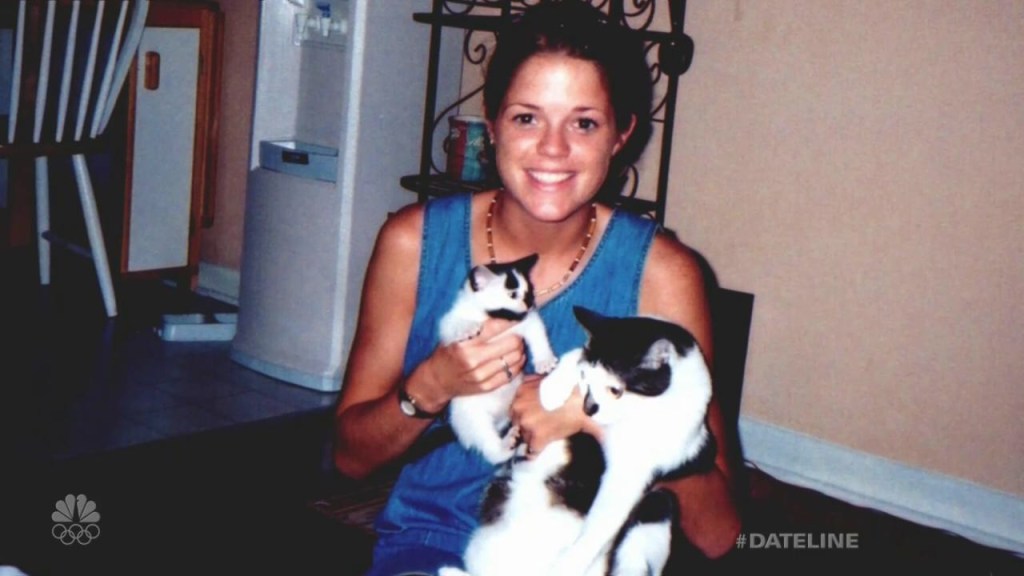
Corey Parker, a 25-year-old woman, was attending college in Jacksonville, Florida, where she worked part-time as a waitress. During the Thanksgiving holiday of her junior year, she did not show up for work and her colleagues began to worry and believed something was wrong. A cook from her work went to her apartment and found that it was locked so he looked inside through her window. He saw her on the bed, naked and dead. Her whole body was covered in blood as if she was painted. There was blood spattered all over the walls, some blood still dripping. She had been stabbed 101 times. I felt shivers run down my spine but I continued to watch. I turned to check the time and saw it was 1:00 am and I was on my 8thepisode of Forensics Files. I can’t help but think to myself why am I watching this and why can’t I stop?
True-crime is the new trend for Netflix and TV viewers. However, this genre has been around for years. It started with print and moved on to television and movies. There were books published in England as early as 1722 recounting actual crimes (Franks, 2016). Throughout the years, many books were written telling the stories of different murders. Eventually, the books turned into movies. In 1967, Truman Capote’s classic, In Cold Blood, hit the theatres making it the first ever movie of this genre and creating mass appeal (Bearden, 2015). It is constantly reinventing itself in order to keep up with the times. It has gone from print to movies to television to podcasts.

True-crime shows are watched by many people, however, according to Dr. Amanda Vicary, a psychology professor, “women are more drawn to true crime than men.” This is because women have a “drive to survive”. They feel that by watching such programs, they may learn some techniques that can help them if they were to find themselves in such a situation. They also learn some signs on how to spot a possible killer. Dr. Sharon Packer, a psychiatrist, says that “watching, listening to, or reading about real crimes could be like a dress rehearsal.” I must admit that as a woman, I do pay attention to the details of the crimes I watch. I observe where the crimes take place and how they happen. For example, a lot of perpetrators enter through doors and windows that have been left open. I find myself checking my windows and doors every night before going to bed. I have also become very aware of my surroundings therefore if I am walking home by myself, I don’t put my earphones in so I can be mindful of what’s happening around me. Being so aware of every movement around me definitely gets my blood pumping.
Not only does my blood keep pumping when I am alone on the streets, but also when I watch true-crime shows, aka the unexpected adrenaline rush. In Psychology Today, Scott A. Bonn says, “adrenaline is a hormone that produces a powerful, stimulating, and even addictive effect on the human brain”. While watching these tv shows, adrenaline runs through our veins much like riding a rollercoaster. Even though our stomach is in knots, chills take over our body and beads of sweat are forming on our forehead, we can’t help but become addicted to this feeling. These nonfictional murder shows keep us on the edge of our seat and let us experience fear and thrill from the safety of our home.
With the adrenaline rush comes the need to solve the mystery. According to Dr. Katherine Ramsland, professor of forensic psychology, “most true crimes on TV and in books are offered as a puzzle that people want to solve. This gives them a sense of closure. It is also a challenge that stimulates the brain”. Even as babies, we are given puzzles as toys such as stacking rings and shape puzzles. If these toys are for kids, then, true murder mysteries are the puzzles for adults. These programs allow us to play, “armchair detective and see if [we] can figure out “whodunit” before law enforcement authorities catch the actual perpetrator.” This reminds me of myself as I have spent countless afternoons binge watching Forensics Filesfrom my recliner, trying to solve the murders. In Corey Parker’s murder case, there were various suspects presented and just when I thought I had it right, they further explored the possibility of other suspects. In this case, I thought it was one of her friends but in the end, I was wrong. It’s a true challenge! Nothing beats that feeling of satisfaction if you get it right and are able to solve a real-life murder.
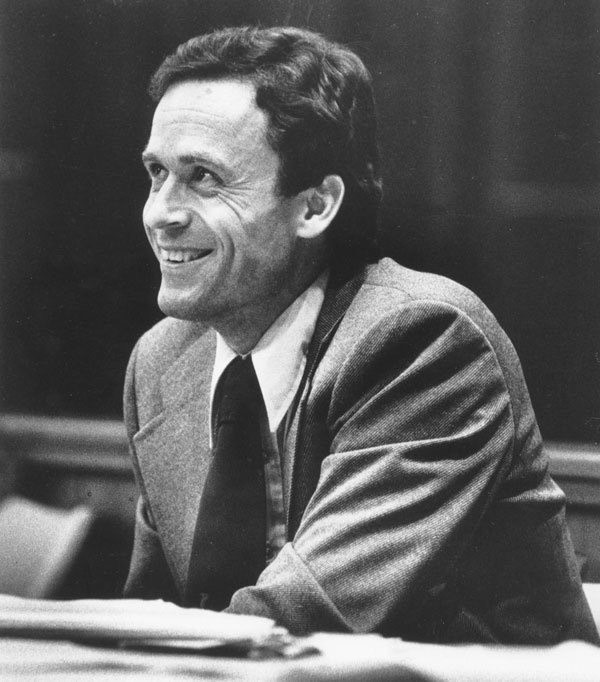
We never forget that these are real murders because unlike fictional stories, “blood shed in true crime is blood shed in our world” (Bearden, 2015).This strikes a chord with the viewers because the actions of murderers cannot be erased. The people who commit these murders are also real and “often blend into society very effectively”. They are not creature-like monsters who have saliva dripping from sharp teeth, they are average looking people that we see every day. It can be anyone from a spouse to a neighbour to just a complete stranger. The perfect example would be Ted Bundy. He was your average guy who was very charming. He was an honour student who studied psychology before he decided to study law. He had a wife and a daughter. However, despite this, he was convicted for murdering 30 women and maybe more.
There is a basic reason that ties in with all the motives of why true-crime holds our interest and that reason is…curiosity. Let’s go step by step. The genre has been popular throughout history because of our curiosity. Women watch these shows because they are curious to learn how to defend themselves. Our curiosity of wanting to know what happens gets our adrenaline going. We are curious to see if we were able to solve the puzzle. Lastly, the fact that there are real people involved, peeks our curiosity as too the who and why.

Humans are just curious by nature and “the desire for knowledge is physiologically arousing in the sense that the information gap between what one knows and what one wants to know makes the curious individual “thirsty” and “hungry” to know more” (Wiggin, et al., 2019).Unsatisfied curiosity leads to a desire for rewards which in turn causes indulgence. For example, because witnessing murders is not an everyday thing, we tend to indulge in true crime and murder documentaries. We have this drive to understand the who, what, where, when, why and how. However, some people can have a dark side when it comes to satisfying the unknown. In addition, “curiosity motivates us from a survival drive”. The more knowledge we have about certain situations, the more we are able to deal with them or avoid them altogether.
Why do we have this curiosity and fascination with evil?
It is just human nature. In fact, this has been going on since the beginning of time. The allure and interest with evil began with “Adam and Eve, who were forbidden to eat fruit from a particular tree” (Lee, et al., 2014). Basically, Adam and Eve transmitted human nature to their descendants (Lee, et al., 2014). Human nature is all about curiosity. For example, when parents tell children not to do something, they will usually end up doing it. Clinical Psychologist Dr. Elizabeth Rutha says “we’re drawn to the tension between good and evil.” Murder is one of the most fundamental taboos and one of the most heinous crimes in society. However, we are still tempted to learn every graphic detail.
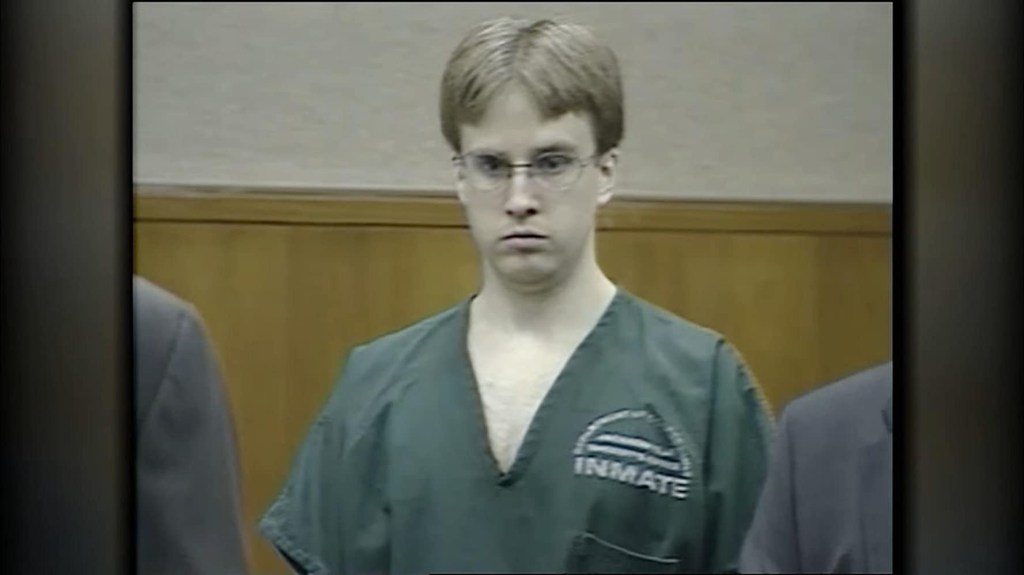
Corey Parker was killed by a 17-year-old boy named Robert Denney. He lived in her apartment complex and had become obsessed with the girl that he saw from his window. While she was out with friends, Robert Denney entered her apartment through her kitchen window, hid in her closet and waited until she came home that night. That night, when she was lying in bed trying to sleep, he attacked her and stabbed her 101 times.He is now serving life in prison. As I’m lying in bed, watching the credits roll, I realize that I am only a curious human being.
 Ariana's Nonfiction Blog